Weather Links For Kite Flyers
The Kite Flyer's Guide to Wind and Weather
Bud has been reading the Alberta sky since he was a kid in Fox Creek, running over April snowpack in rubber boots with a homemade kite trailing behind him. After 35 years in the kite business, he will tell you that understanding the wind is the single most important skill you can develop as a kite flyer. You stop looking at the sky just to check for rain, and start reading the trees, the flags, the surface of a lake. The wind is always talking. You just have to learn the language.
Living on the Alberta prairies, we know better than most that the wind can be feast or famine. One day it is dead calm. The next it is blowing hard enough to snap a fiberglass spar clean in half. We have put together this guide to help you read the conditions, choose the right kite, and make the most of every day you get out there.
As Sharon likes to say: you do not think about other pressures out there. You just look up at the sky.
The Best Weather Apps and Tools for Canadian Kite Flyers
A quick glance at the local forecast is a starting point, not a plan. Serious kite flyers use tools built for wind sports. These are the ones we rely on:
- Windy.com: This is the first place we check. It gives you a real-time animated map of wind currents, showing you exactly how the air is moving across your specific terrain. You can see wind speed, gusts, and direction down to the exact hour. If you have never used it, prepare to be impressed.
- Windguru: Originally built for windsurfers and kitesurfers, Windguru is technical but highly accurate. It lays out detailed tables showing wind speed, gust strength, and cloud cover. If you are heading out with a large power kite or planning a kite buggy session, check this one first.
- Environment Canada: For reliable localized warnings and hourly forecasts, Environment Canada is still the standard. Pay close attention to their wind warnings and hourly updates, especially in Alberta where a front can roll in faster than you expect.
- UAV Forecast: Designed for drone pilots, this app is surprisingly useful for kite flyers. It tells you the wind speed not just at ground level, but at 100 feet up, which is exactly where your kite is flying. Ground readings can be misleading. This one tells you what is actually happening at line height.
How Much Wind Do You Actually Need?
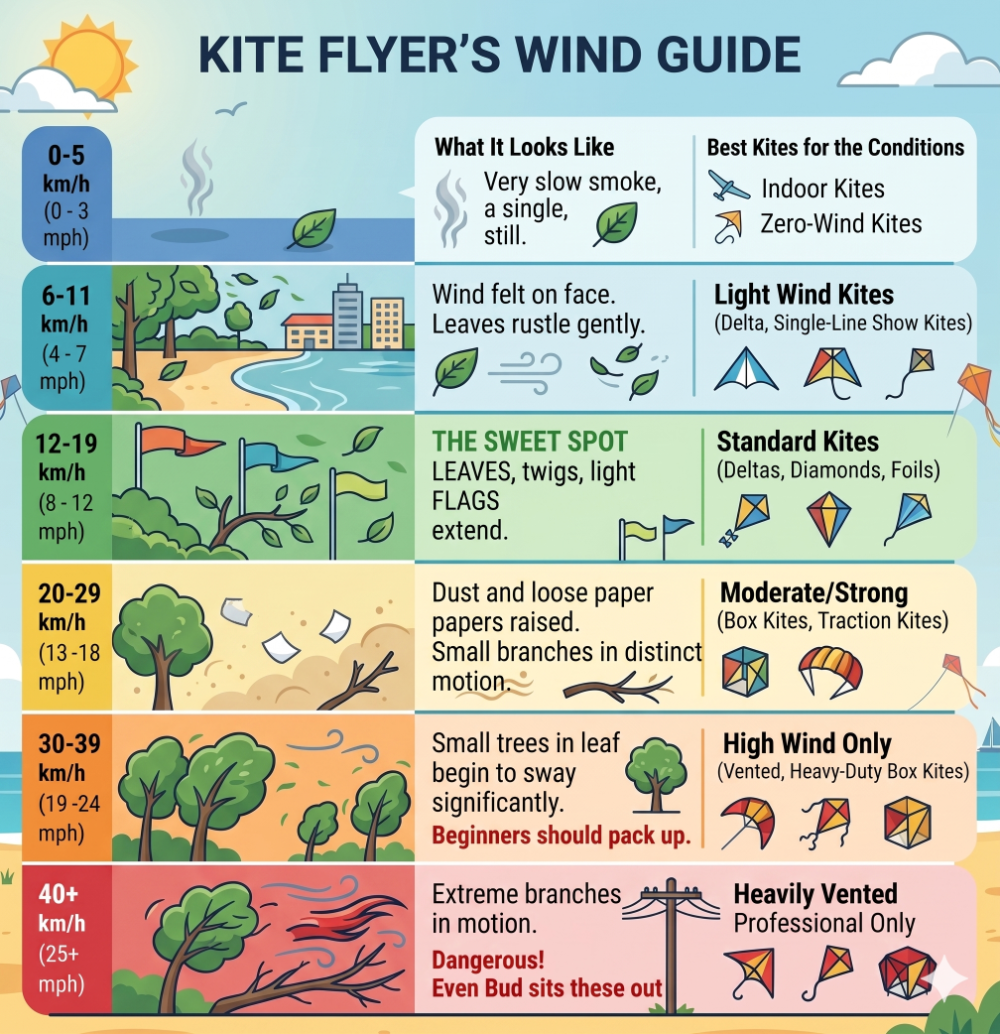
The most common mistake beginners make is trying to fly in the wrong wind. If you are running to keep your kite in the air, there is not enough wind. If your kite is violently spinning and jerking your arms, there is too much.
Here is a guide to wind speeds and which kites belong in which conditions:
Pro Tips for Reading the Wind
Even the best apps cannot tell you exactly what the wind is doing at your specific flying field. Here is what 35 years on the field has taught us:
1. Watch Out for Dirty Wind
Wind that passes over trees, buildings, or hills becomes turbulent and choppy. Kite flyers call it "dirty wind," and it will give you fits. If you are standing downwind of a treeline, your kite will struggle to launch, spin unpredictably, and suddenly drop. Always look for clean wind coming off open fields or water. Here in Alberta, the prairies are your friend.
2. The Wind Is Always Stronger Up High
Ground friction slows the wind down. The air at 100 feet is almost always faster and smoother than what you feel at ground level. If conditions feel marginal, get your kite up through the turbulence near the ground and it will often find a steady breeze higher up. Patience on the launch pays off.
3. Build a Kite Quiver
Experienced flyers never show up with just one kite. Bud keeps a light-wind Delta, a standard stunt kite, and a high-wind vented kite within reach at all times. That way, no matter what the conditions are when you arrive, there is always the right kite for the job. We can help you put together a quiver that covers every kind of Alberta day.
4. Alberta Winds Have a Personality
Chinooks can transform a frozen January afternoon into a warm, 40 km/h kite-flying session in a matter of hours. Spring winds on the prairies are strong but often gusty. Summer evenings calm down beautifully. If you are new to flying in Alberta, give it a full year before you decide you know what to expect. The sky out here keeps surprising us, and we have been at this for decades.
If you need help choosing the right kite for your local conditions or the kind of flying you want to do, we are always happy to talk it through.
Fly a kite, just for the health of it.